Introduction
In recent years, the deep integration of artificial intelligence (AI) and digital signage has been reshaping the interaction paradigm between businesses and their audiences with unstoppable momentum. AI digital signage fundamentally distinguishes itself from traditional digital signage by empowering displays with an "intelligent brain" capable of autonomous learning and dynamic response. From advertising screens in shopping malls that adjust recommendations based on customer expressions to signage in subway stations that provide real-time information on delays, smart digital signage is transcending the boundaries of static displays, building a real-time communication ecosystem that perceives, thinks, and interacts.
1. Personalized and Targeted Advertising: Making Every Display "Hit" the Need
Within the
AI digital signage technology matrix, personalized push notifications are the most intuitive application scenario. By integrating cameras, sensors, and deep learning algorithms, the system can capture audience demographics (age, gender), behavioral states (duration of stay, gaze direction), and even emotional fluctuations (smiling, frowning) in real time. For example, at a beauty counter, if a young woman remains in front of a smart signage for more than five seconds, the system automatically plays a foundation swatch video; if a male viewer appears, promotional information for men's skincare sets is displayed. This precise matching is driven by the smart digital signage's ability to rapidly process massive amounts of data. It integrates information such as browsing history and regional consumer habits to continuously optimize its recommendation model. Pilot data from a supermarket chain shows that digital signage using AI-powered personalized recommendations increased click-through rates for promotional items by 37% and increased average customer spending by 12 yuan. Compared to the "broad-based" advertising model of traditional advertising, AI-powered digital signage truly achieves personalized, targeted reach.
2. Real-time Content Optimization: Dynamically Responding to the Environment
One of the core competitive advantages of the smart digital signage lies in its keen awareness of the external environment and its ability to adapt instantly. The system can access real-time data such as weather, traffic, events, and news through APIs, ensuring that displayed content is highly synchronized with the needs of the specific situation. This dynamic optimization is particularly evident in the restaurant industry. Fast food chains' AI-powered digital signage automatically highlights breakfast combos during the morning rush hour and switches to business-style light meals during lunch. If the weather forecast indicates afternoon rain, the screen immediately adds promotional information for hot soup and tea. If nearby office buildings announce overtime hours, the system pushes out late-night snack combos. At transportation hubs, smart digital signage can automatically extend advertising hours for nearby restaurants and convenience stores based on train delays, while also reminding passengers to change routes. This adaptive, time-sensitive approach transforms digital signage from a passive display tool into a proactive information hub.
3. Data-Driven Insights: From Display Screens to Decision-Making "Dashboards"
AI-powered digital signage is not only an information output but also a data collection portal. Each smart screen acts as a miniature data center, recording visitor interaction (number of touches, click preferences), dwell time, and foot traffic fluctuations, and aggregates and analyzes data through a cloud platform. Using this data, companies can clearly understand audience characteristics at different times and locations. For example, digital signage in office building lobbies has the highest click-through rate at 10 a.m. on weekdays, primarily targeting professionals aged 25-35. Screens on the first floor of shopping malls are more popular on weekend afternoons, with families accounting for 60% of the audience. These insights can directly guide marketing strategy adjustments—for example, increasing advertising for coffee and digital products for professionals and designing promotional content for family-friendly packages.
More advanced smart digital signage can also integrate sales data to form a closed-loop analysis. If a product's ad receives high impressions on the screen but actual sales are low, the system will automatically indicate a potential problem with the creative content. If engagement rates on digital signage in a specific area continue to decline, it will recommend relocating the signage or upgrading the hardware. This "display-feedback-optimization" cycle makes digital signage a "visual dashboard" for corporate marketing decisions.
4. Enhanced Customer Interaction: Immersive Experiences Reshape the Consumption Landscape
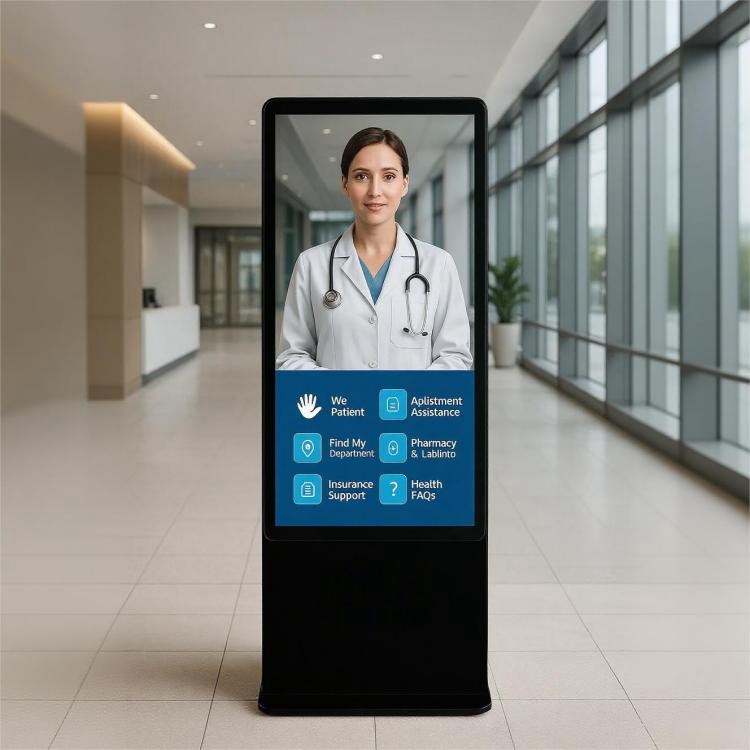
The combination of interactive technology and AI-powered digital signage is reshaping the offline consumer experience. Through facial recognition, gesture control, and voice interaction, smart digital signage can transform customers from passive viewing to active participation.
In the retail sector, a virtual fitting mirror is a prime example: a customer stands in front of an
AI digital signage, and the system generates a body model through 3D scanning. Simply saying "try on this red dress" will instantly display how it would look on them, and recommend suitable shades based on their skin tone. In home furnishing stores, smart screens can recognize floor plans scanned by customers using their phones, automatically generate furniture placement plans, and allow users to adjust furniture positions and change styles using gestures. Data from a sports brand's experience store shows that customers who have installed interactive AI-powered digital signage experience a 40% increase in dwell time, a 28% increase in try-on rates, and a 15% increase in final purchase conversion rates. This immersive experience not only enhances shopping pleasure but also lowers the decision-making threshold, making the consumer process more efficient and enjoyable.
5. Artificial Intelligence and Predictive Maintenance: Keeping the System Always Online
For digital signage networks deployed in shopping malls, airports, and outdoor settings, equipment failures can disrupt marketing. AI digital signage's predictive maintenance feature builds a device health model by monitoring parameters like screen brightness, temperature, and operating speed in real time. If data fluctuates abnormally, the system issues an early warning, allowing technicians to conduct repairs before a failure occurs.
For example, an outdoor smart digital signage can predict potential moisture in internal wiring during periods of continuous rainfall, automatically alerting the maintenance team to perform a seal inspection. Similarly, if a smart screen in a shopping mall detects a drop in cooling fan speed, it will proactively send a maintenance reminder. This proactive approach has reduced device downtime by over 60%, significantly lowering operational and maintenance costs and ensuring 24/7 stable display of marketing content.
Conclusion
The rise of AI
digital signage and smart digital signage is redefining the future of display technology. They are no longer simply information carriers; they are intelligent interactive platforms that integrate data analysis, personalized services, and real-time response. From improving ad conversion rates to optimizing customer experiences, from reducing operational and maintenance costs to assisting business decision-making, AI empowers digital signage with multi-dimensional value and is driving the evolution of marketing models across various industries. With the continued development of technologies like 5G, edge computing, and computer vision, future smart digital signage systems will possess even more powerful perception capabilities, more precise decision-making logic, and more natural interaction methods. Perhaps in the near future, every screen around us will function like a "caring assistant," understanding needs, adapting, and interacting, truly achieving a new level of communication where "technology is people-centric."


